Watching Shards of Light from the perspective of international criminal law
Wars leave behind societies deeply marked by violence. It often seems almost unimaginable how such experiences can ever be comprehensively addressed. And yet, concepts such as “reconciliation” and “reparation” play a central role in peace processes. But how can we speak about violence – and what avenues exist for confronting it? What does “coming to terms with violence” mean to those affected? And how does a society deal with perpetrators?
Together with the movie directors of Shards of Light, Mila Teshaieva and Marcus Lenz, we will explore these questions. In a conversation with Professor Dr Christoph Safferling, Professor of International Criminal Law (Friedirch-Alexander-Universität Erlangen-Nürnberg) and Director of the Nuremberg Academy, we will discuss the movie from the perspective of international criminal law and use it as a starting point for a critical discussion on the possibilities and limitations of (international) criminal justice. The discussion will be moderated by Project Officer Astrid Walter. Shards of Light is a 2025 Ukrainian-German documentary film directed by Mila Teshaeva and Marcus Lenz, exploring life in the Ukrainian city of Bucha after the Russian invasion and occupation.
Watch the trailer here.
The panel discussion is part of the Nuremberg International Human Rights Film Festival and will be held following the screening of Shards of Light.The discussion will be moderated by Astrid Walter (International Nuremberg Principles Academy).
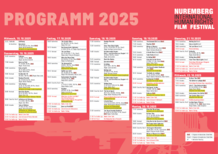
The movie screening will start Friday, 17 October 2025, at 6.45 pm. Information regarding ticket sales is available on the Festival's website. The panel discussion will start at 8.30 pm; entrance will be free. Further information can be found here and in the programme below and the festival magazine (in German). (aw)